Preparing for a new Manatee County school year involves more than finding supplies and adjusting bedtime routines. School vision readiness also means confirming that your child can see classroom displays, read comfortably, use digital devices, and shift focus between near and distant materials.
Children do not always realize that their vision is different from anyone else’s. A pediatric eye exam can identify concerns that may otherwise be mistaken for distraction, frustration, or a reluctance to complete schoolwork.
1. Is Your Child Squinting or Moving Closer?
Squinting may temporarily make a blurry image appear more defined. A child might also sit close to the television, hold devices near their face, or ask to move closer to the front of the classroom.
These behaviors can suggest nearsightedness or another refractive error. An exam can determine whether prescription glasses or a different form of care is appropriate.
2. Do Headaches or Tired Eyes Follow Schoolwork?
Frequent headaches, eye rubbing, blinking, or complaints of tired eyes may develop after reading, homework, or screen use. These symptoms do not always have a visual cause, but they are worth discussing with an optometrist when they recur.
A child eye health check can evaluate the prescription, focusing ability, eye coordination, and ocular health. Sharing when symptoms occur helps the optometrist understand which tasks are most difficult.
3. Does Your Child Lose Their Place While Reading?
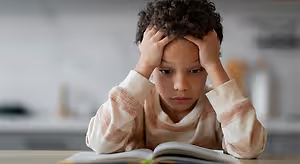
Watch for skipped words, repeated lines, use of a finger to maintain position, or frequent loss of place. Some children may avoid reading altogether because the task feels uncomfortable or unusually demanding.
Reading difficulties can have many causes, and an eye exam cannot diagnose a learning disability. It can, however, identify or rule out visual concerns that may be adding to the challenge.
4. Does Your Child Cover or Tilt Their Head?
Closing one eye, tilting the head, or turning the face when looking at an object may be a way of compensating for uneven vision or difficulty using the eyes together. Occasional behavior may not be concerning, but a persistent pattern deserves attention.
Tell the optometrist if you have also noticed an eye turning inward or outward, double vision, poor depth perception, or difficulty catching a ball. These observations provide useful context during the examination.
5. Have School or Sports Tasks Become More Difficult?
A child may struggle to copy notes from the board, recognize distant faces, track a moving ball, or move confidently through visually busy spaces. Changes in classroom participation or athletic confidence can sometimes accompany an unrecognized vision concern.
Vision is only one part of academic and sports performance, so an exam cannot explain every difficulty. It can clarify whether visual correction or additional assessment should be part of the next step.
How Does a School Screening Compare With an Eye Exam?
When comparing a student eye screening vs comprehensive exam, the key difference is scope. A screening offers a limited check intended to flag possible concerns, while a comprehensive examination evaluates visual clarity, prescription needs, eye coordination, focusing, and eye health.
A child can pass a screening and still have a vision or eye health issue. The American Optometric Association advises that screening should not be considered a replacement for a comprehensive examination.
What Happens During a Pediatric Eye Exam?
[tokens name='practice'] welcomes children beginning at age five. The practice uses age-appropriate testing to assess vision at different distances, eye teaming, focusing, alignment, and eye health while keeping parents informed throughout the visit.
If nearsightedness is identified and appears to be progressing, the optometrist may also discuss myopia management. Recommendations depend on the child’s age, prescription, eye health, visual needs, and ability to use the treatment correctly.
Is Your Child Ready for the School Year?
Do not wait for a failed screening or an obvious complaint if you have noticed changes in your child’s visual behavior. Schedule an examination with Manatee Eye Care in Englewood, Florida to support your child’s school vision readiness.